How to Develop a RAG-Powered Application: Process and Costs
Introduction
Retrieval-Augmented Generation (RAG) is transforming how enterprises leverage artificial intelligence for accurate, dynamic, and context-aware applications. By blending the strengths of large language models (LLMs) with external, up-to-date data sources, RAG-powered apps solve the limitations of static, “hallucinating” AI and open doors to use cases like advanced chatbots, personalized search, and enterprise knowledge mining. But what’s involved in building such a solution—and what might it cost? This guide explores the full development process and provides a transparent cost breakdown to help you plan your journey into RAG-powered innovation.
Understanding the RAG Workflow
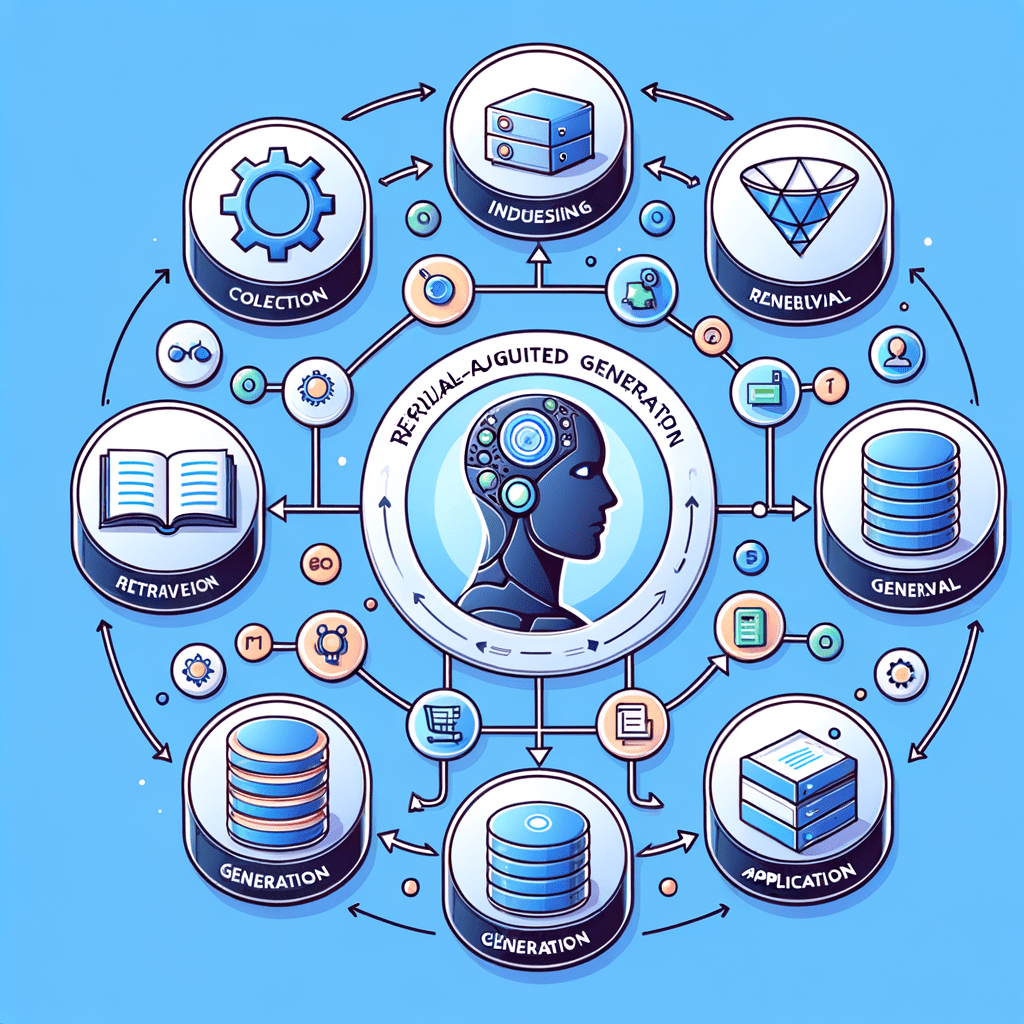
RAG apps operate at the intersection of AI-powered generation and real-time information retrieval. The core process involves:
-
Data Preparation
-
Collect raw, unstructured, or structured datasets (PDFs, docs, web data, databases).
-
Clean, deduplicate, and segment this data into manageable “chunks” for easier indexing and retrieval.
-
-
Indexing and Embedding
-
Transform these chunks into semantic vector representations using embedding models.
-
Store vectors in a vector database optimized for similarity search (like Pinecone, Weaviate, or Milvus).
-
-
Retrieval and Generation
-
At runtime, a user query triggers vector retrieval of relevant document chunks.
-
The context from these chunks is paired with the user’s question, then provided as a prompt to an LLM to generate an accurate, grounded response.
-
-
Application Layer
-
Build a user-facing interface (chatbot, search, Q&A) and backend API to facilitate interactions, chain the workflow, and orchestrate the RAG pipeline with tools like LangChain or LlamaIndex.
-
-
Deployment and Monitoring
-
Deploy your solution, set up monitoring for quality, latency, and performance, and continuously improve through data updates and model tuning.
-
Key Steps in Building a RAG-Powered Application

-
Collect and Clean Data
-
Use libraries/tools (BeautifulSoup, PyPDF2, PDFplumber) for document parsing.
-
Ensure high-quality input data—“garbage in, garbage out” rings especially true for RAG pipelines.
-
-
Embed and Index
-
Choose or train a suitable embedding model.
-
Store embeddings in a scalable vector database that fits your use case size.
-
-
Orchestrate the Pipeline
-
Connect data ingestion, retrieval, and generation components with orchestration tools.
-
Implement retrieval strategies (hybrid search, query rewriting, reranking) for search accuracy.
-
-
Develop User Interface & API
-
Design intuitive UIs and robust APIs to let users interact with the system seamlessly.
-
-
Test and Deploy
-
Rigorous QA to assess retrieval accuracy, response quality, latency.
-
Deploy in your preferred environment (cloud, on-prem, hybrid).
-
-
Monitor and Optimize
-
Track user queries, feedback, and model performance for ongoing refinement.
-
Development and Operational Costs

One-Time Develoment costs
-
Basic RAG App: $40,000–$200,000
-
Small knowledge base, simple pipeline, limited interface, minimal prompt engineering.
-
Small team (1–2 developers) over a few months.
-
-
Medium Complexity: $300,000–$500,000
-
Robust production features, hybrid search, advanced pipelines, integrations with enterprise tools, more data types, and larger datasets.
-
Team of AI/ML and backend engineers.
-
-
Advanced/Enterprise-Grade: $600,000–$1,000,000+
-
Custom models, multi-hop reasoning, agent workflows, streaming data, massive scale.
-
Large, senior team, several months of dev, dedicated GPU infrastructure, security compliance, comprehensive testing.
-
Ongoing (Operational) Costs
-
Vector Database:
-
Examples: Pinecone starts ~$70/month (beyond free tier); Weaviate from $25/month plus $0.095 per million vector dimensions.
-
Costs scale with data size and query volume.
-
-
Compute Resources:
-
Embedding computation, retrieval, LLM inference—price depends on size and speed requirements.
-
High-performance GPUs, high-memory CPUs, and cloud fees for scalable deployment.
-
-
Software Maintenance:
-
Continuous data updates, monitoring, bug fixes, compliance.
-
-
Cloud Services & Support:
-
Storage, bandwidth, uptime SLAs, security protocols.
-
Cost drivers include dataset scale, desired app complexity, user load, integration depth, compliance needs, and response speed.
Conclusion
Developing a RAG-powered application is a strategic investment for businesses aiming to provide accurate, current, and reliable AI-driven experiences. The core process—data prepping, embedding, retrieval, generation, and user-facing delivery—is supported by a diverse tech ecosystem. While basic solutions are increasingly accessible, costs grow swiftly as data size, complexity, and enterprise requirements increase. For best results, start with a clear understanding of your use case, dataset, and performance needs, and partner with experienced AI specialists to optimize value for every dollar spent.
Ready to explore a tailored RAG solution? Assess your data, define your requirements, and seek expert guidance to build a future-ready application that scales with your business.
FAQ
1. What is a RAG-powered application?
A RAG-powered app combines retrieval of relevant data from external/internal sources with text generation using large language models to provide accurate, factual outputs.
2. How long does it take to build a RAG solution?
Simple prototypes can be built within a few months; advanced, production-grade apps may require 6–12+ months, depending on requirements.
3. What are the biggest cost drivers?
Team expertise, dataset size, interface complexity, required performance (speed/accuracy), and recurring infrastructure (cloud/vector DB).
4. What skills are needed to develop a RAG app?
Data engineering, AI/ML modeling, API/backend development, cloud deployment, UI/UX design, and ongoing monitoring/QA.
5. Can I use open-source tools for RAG development?
Absolutely—frameworks like LangChain, LlamaIndex, and vector databases (e.g., Milvus, Qdrant) can lower costs and speed up development.